
Have you ever thought about taking a train vacation across the United States and wondered if it is worth the money? For me, it had been 30 years since I last rode Amtrak—traveling between Chicago and Carbondale, Illinois, aboard the City of New Orleans. That, however, was merely a six-hour daytime trip in coach. How would an extended overnight journey in a private sleeper car compare?
Before committing to a cross-country adventure, we decided to test the waters with an 18-hour trip from Chicago to Washington, D.C. aboard the Amtrak Floridian.
Departing Chicago’s Union Station
Our journey began at Chicago’s historic Union Station, located just two blocks west of the Willis Tower (formerly the Sears Tower).
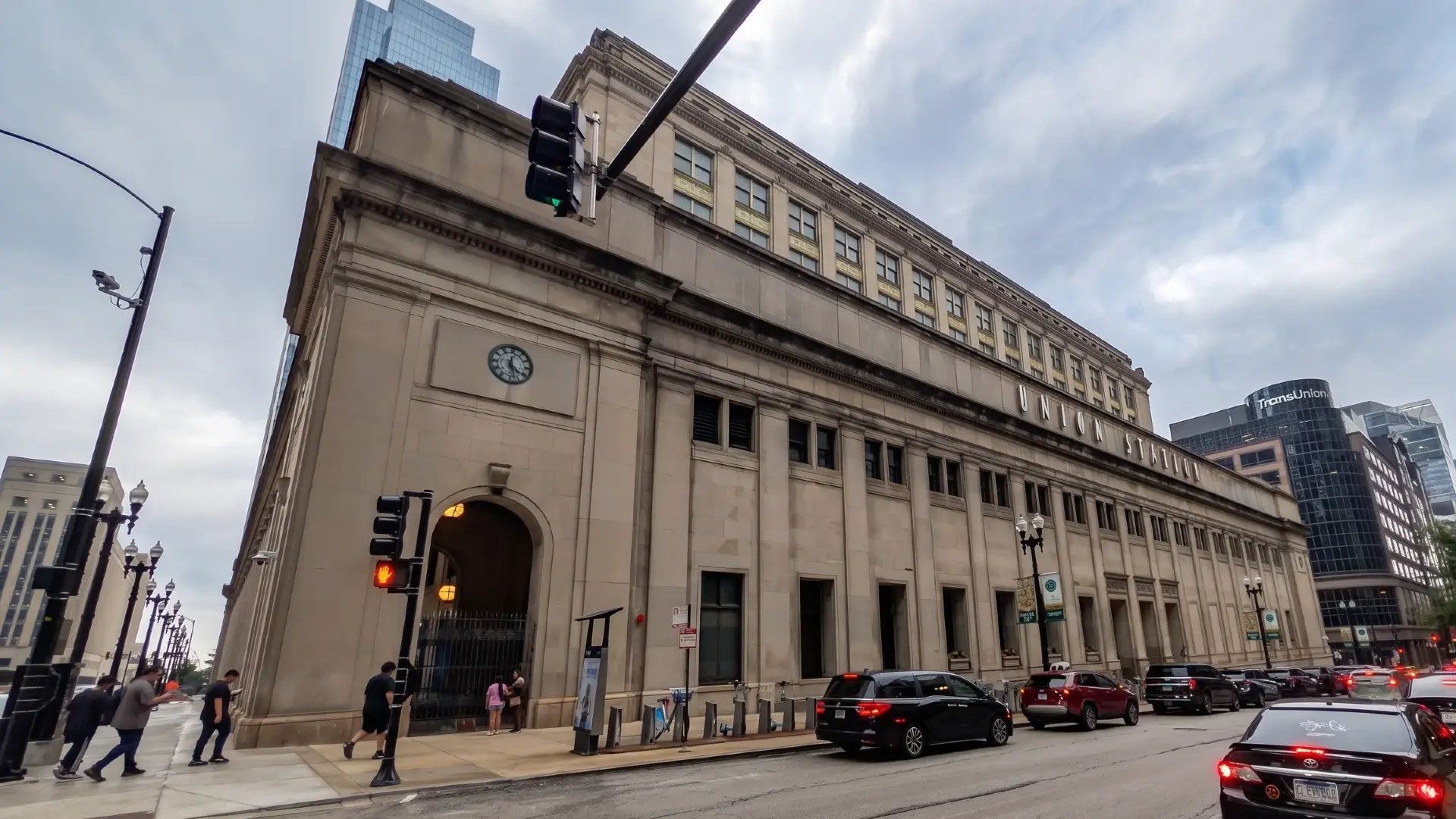
Chicago’s Union Station (41.878731, -87.640347)
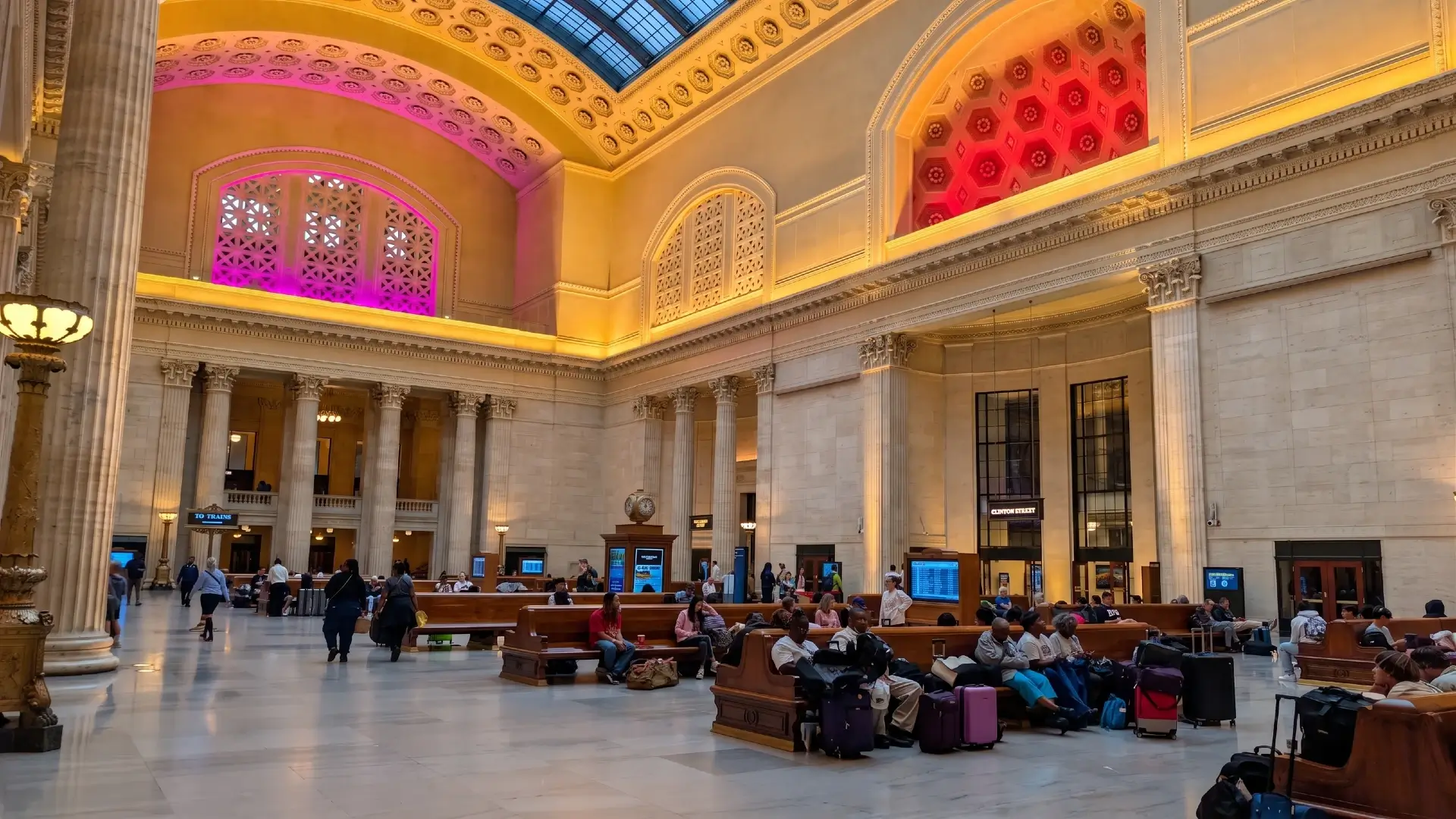
Chicago’s Union Station Main Hall (41.878731, -87.640347)
Construction of Union Station began in 1914 for $75 million and was completed in 1925 following delays caused by World War I and local labor strikes. At its mid-century peak, the terminal handled over 100,000 daily passengers and served as a vital World War II transit hub before the rise of highways pushed its concourses entirely underground in 1969. After becoming the city’s sole intercity rail terminus under Amtrak in 1971—and undergoing extensive multi-million-dollar restorations to its iconic skylight and plasterwork—the designated Chicago Landmark has reclaimed its splendor as one of the busiest passenger rail terminals in the country.
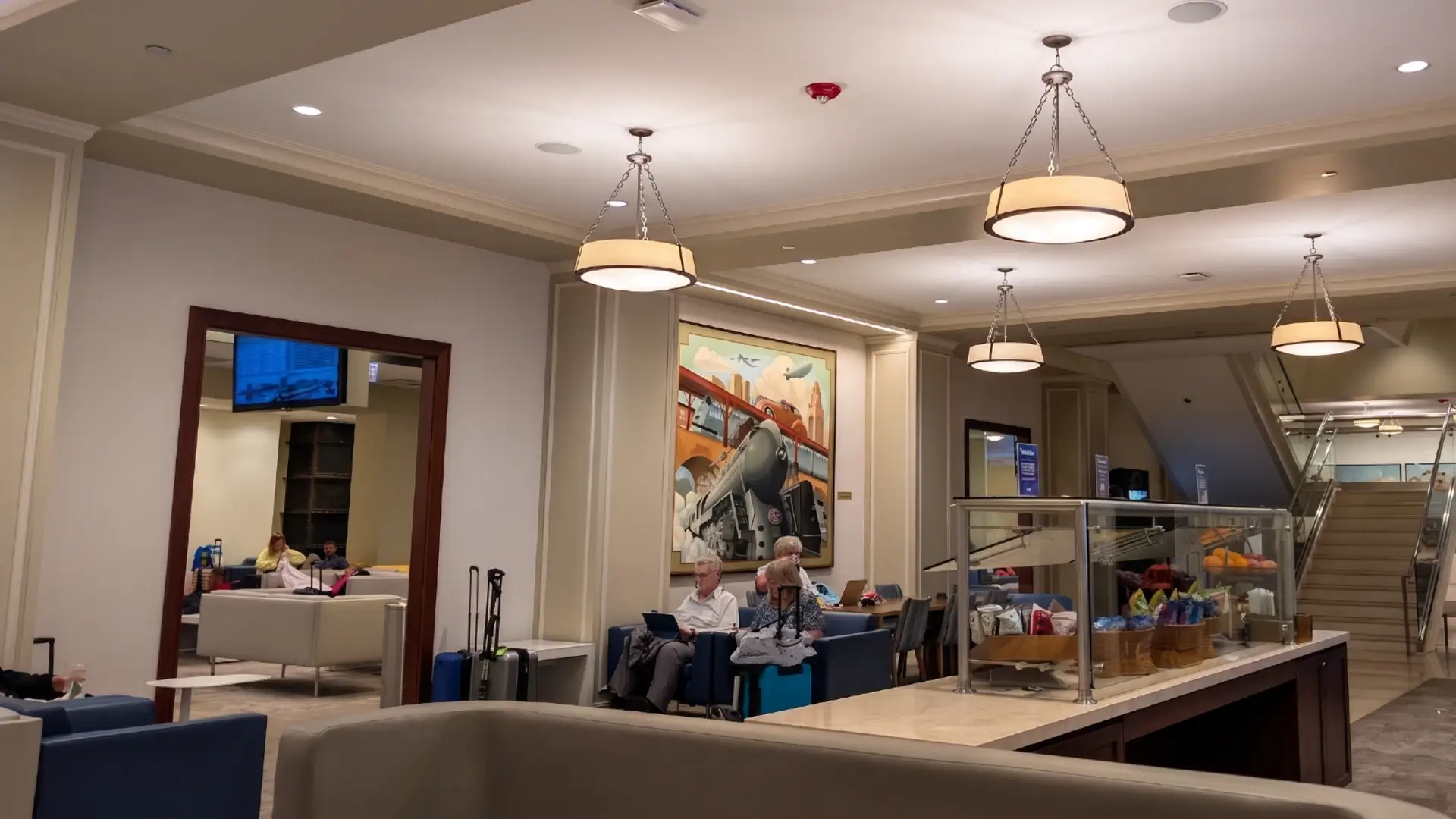
Amtrak’s Metropolitan Lounge, Union Station (41.878731, -87.640347)
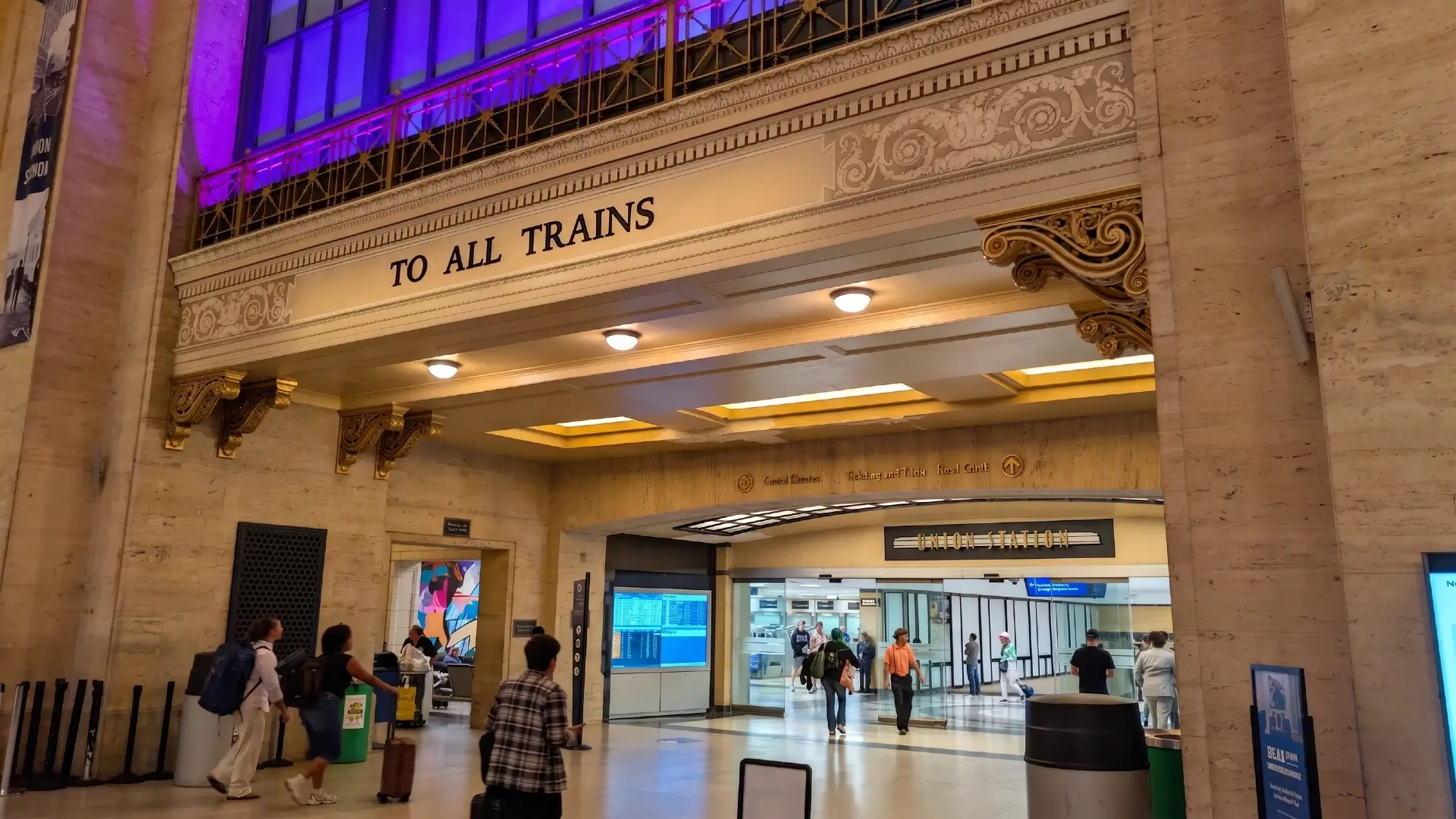
Chicago’s Union Station (41.878731, -87.640347)
Arriving two hours ahead of departure, we took advantage of the Amtrak Metropolitan Lounge. Sleeper car passengers receive complimentary access to these lounges across seven major Amtrak hubs. The lounge provided a quiet, comfortable waiting environment with Wi-Fi, complimentary snacks, non-alcoholic beverages, and a bar for purchasing beer, wine, and cocktails.
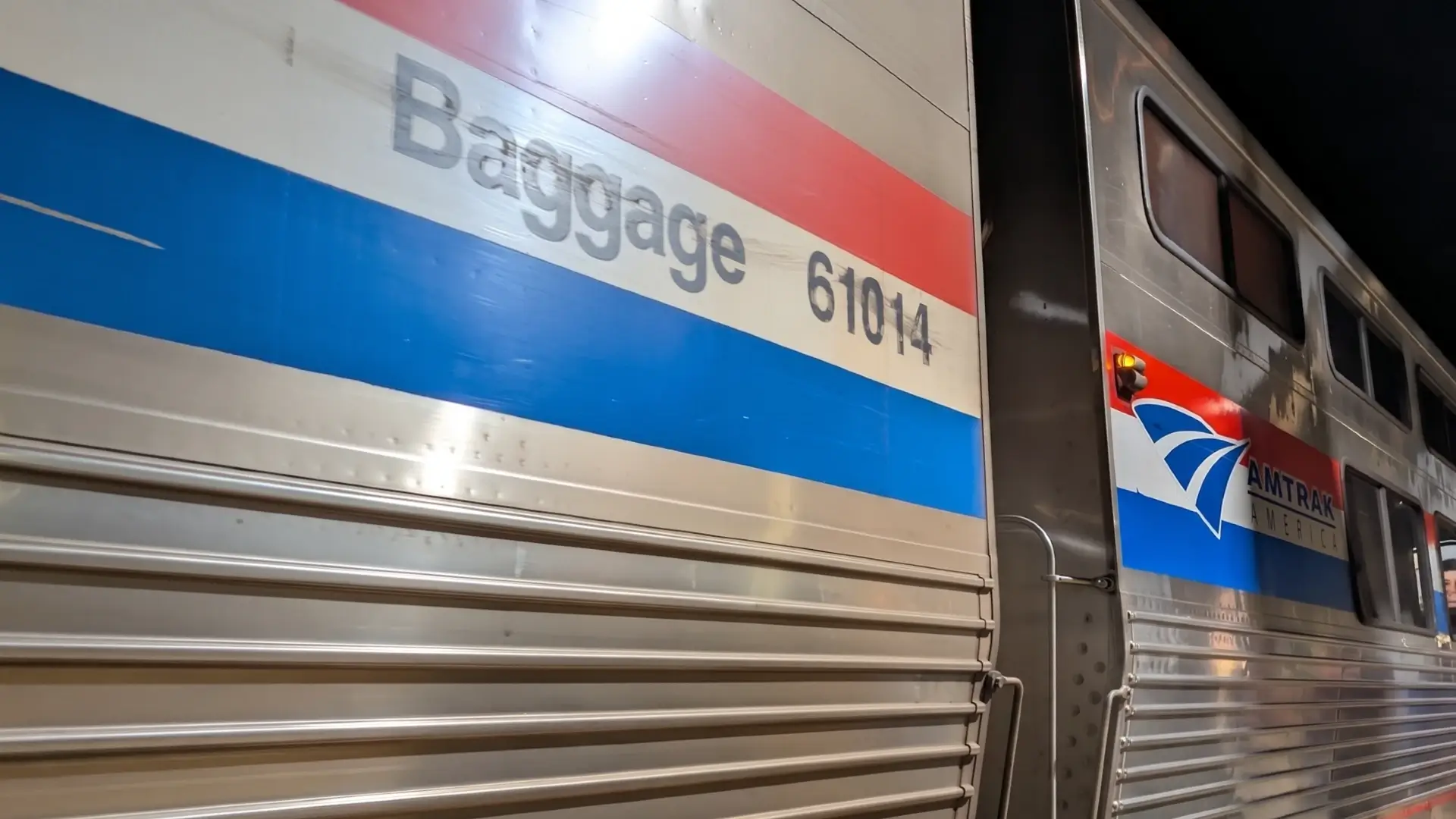
Boarding at Chicago’s Union Station (41.878731, -87.640347)
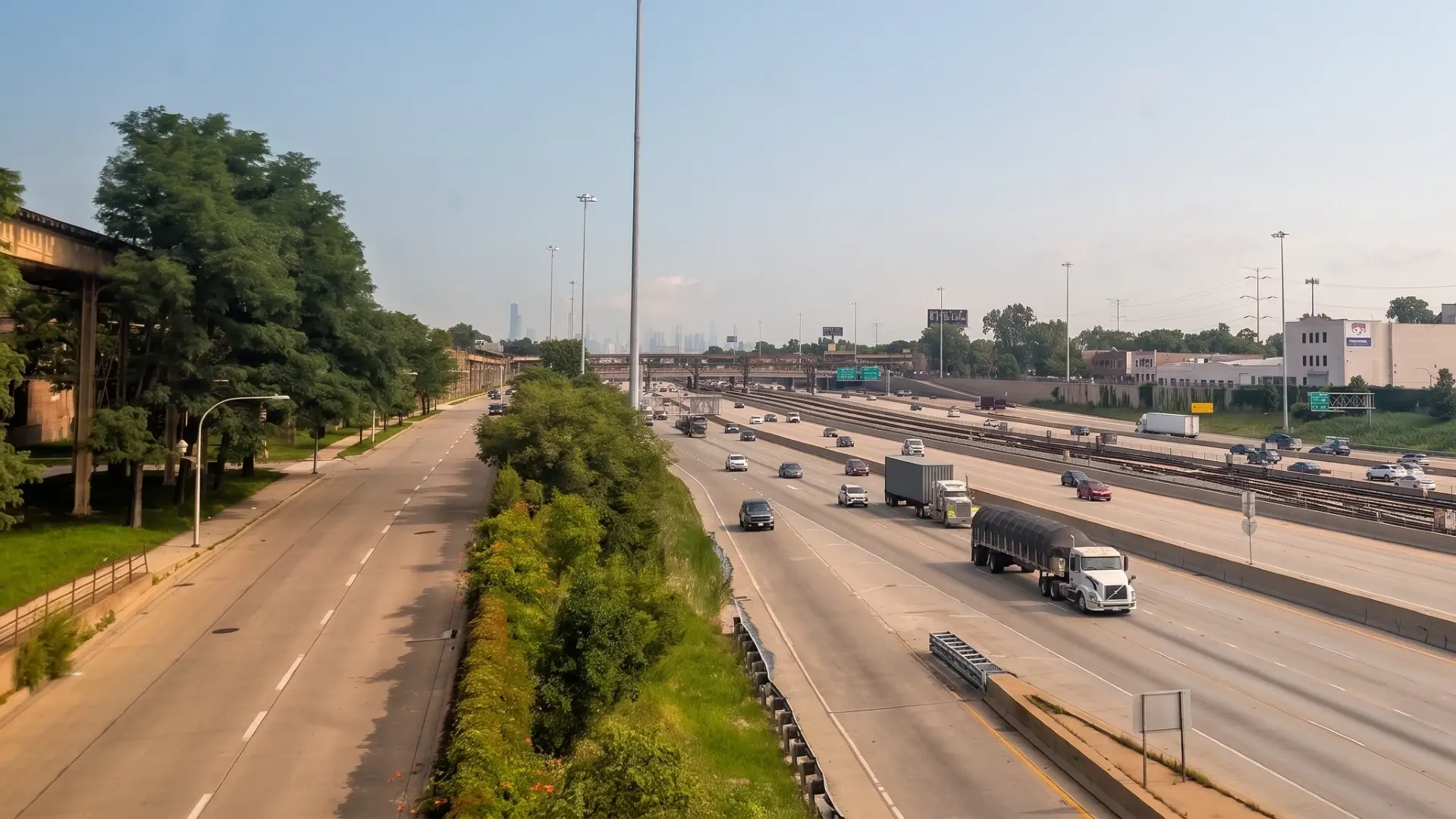
Leaving Chicago over Interstate 94 (41.781379, -87.631348)
When boarding commenced, an Amtrak attendant escorted first-class passengers directly to the platform for priority boarding. Passengers have the option to carry luggage into their room or hand larger bags to the car attendant for storage.
The Sleeper Car & Accommodations
The train consisted of roughly 10 to 12 cars: five standard coach cars behind the locomotive, followed by a split café/dining car, three sleeper cars, and a rear baggage car. Our room was located in sleeper car 4012, three cars back from dining.
Upon boarding, we stepped into a clean, dated bedroom equipped with a three-person sofa, a swivel captain’s chair, a private sink, and an enclosed wet room. Amtrak lists the room dimensions as 7’1″ x 6’6″, though the large sofa and enclosed bathroom make the footprint feel considerably tighter. The room featured two large countertop-height windows and two smaller upper windows. The climate control kept the room cool via adjustable airflow vents, though there were no independent in-room temperature dials.
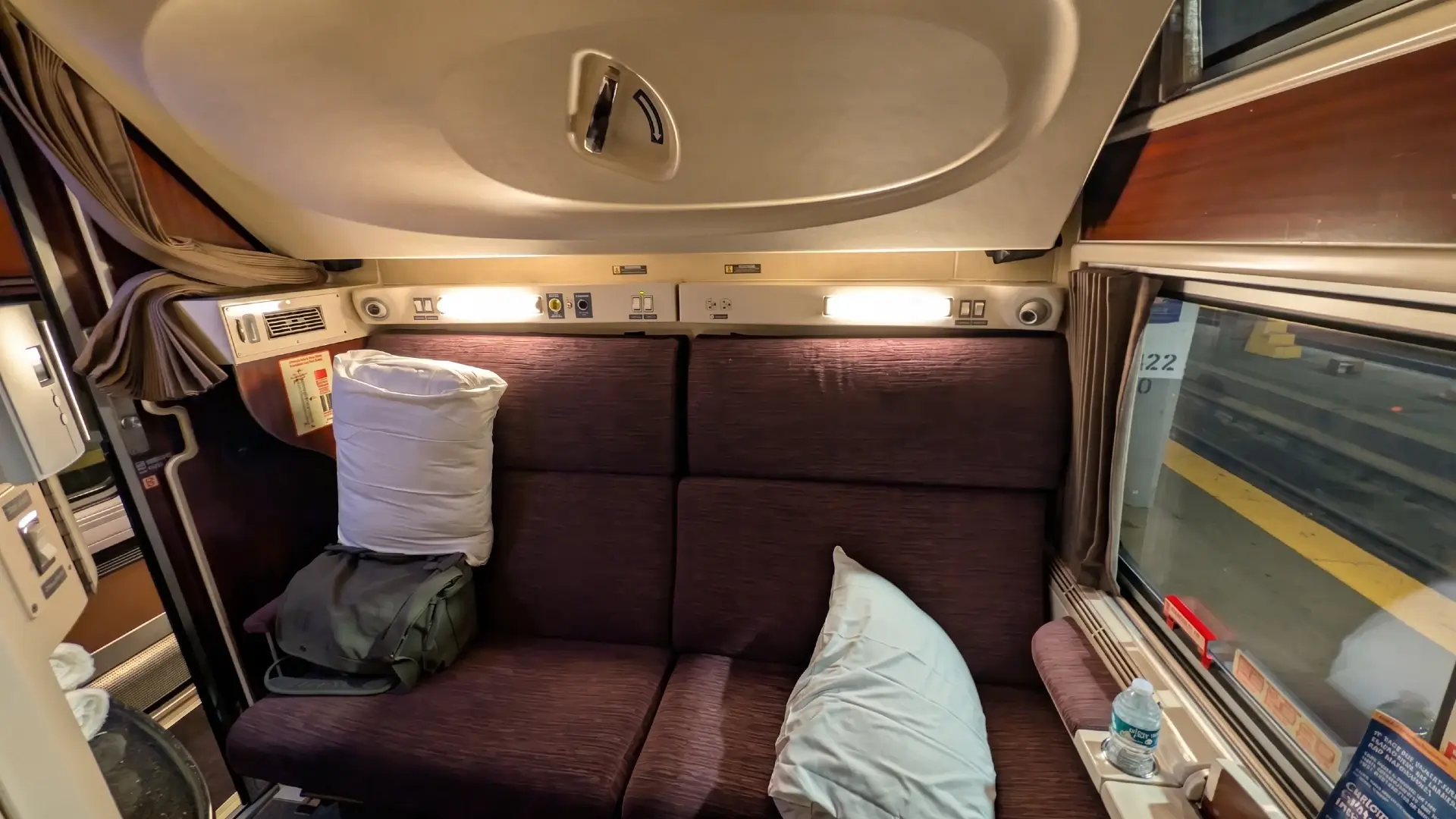
Inside Sleeper Car
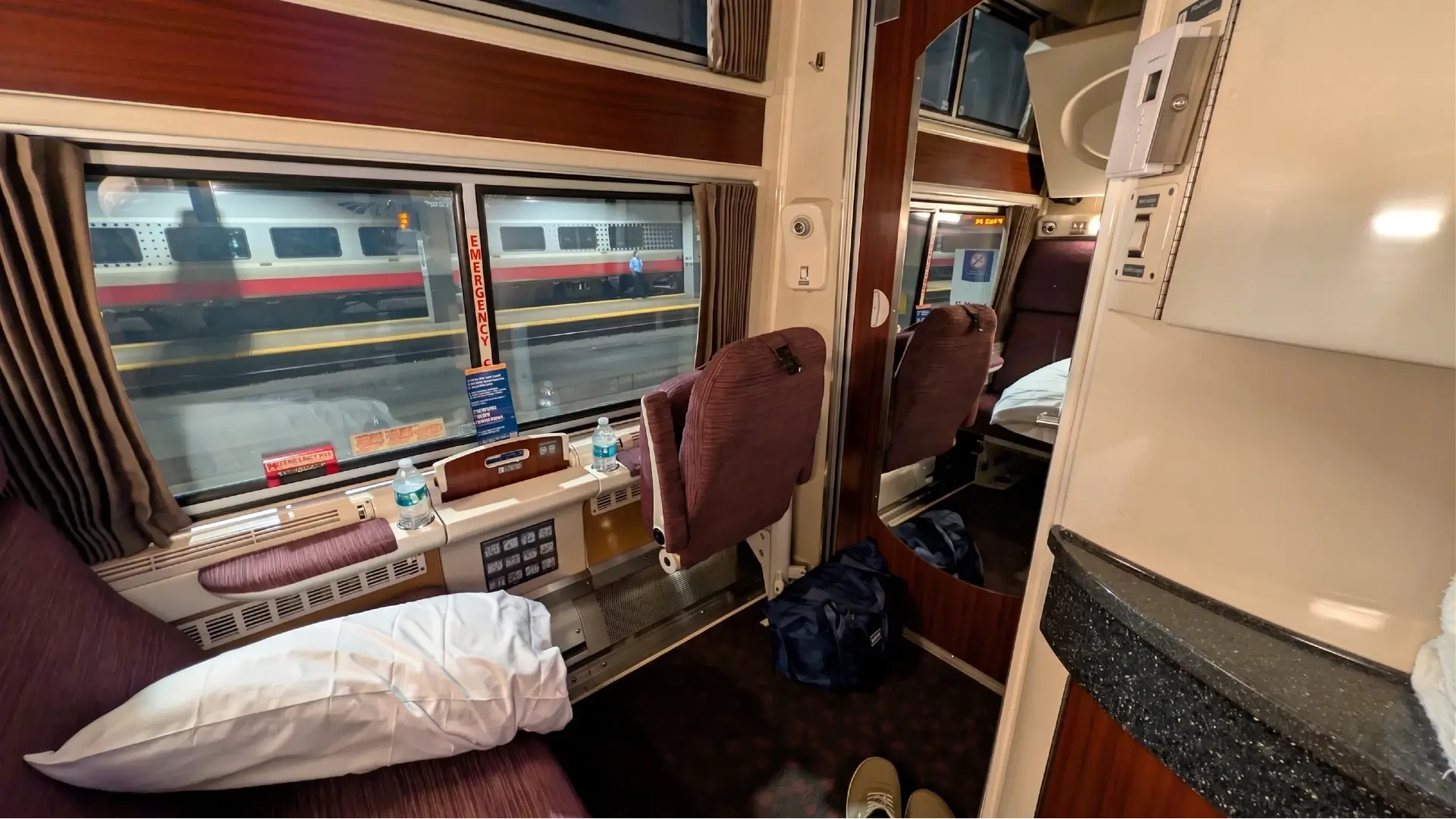
Inside Sleeper Car
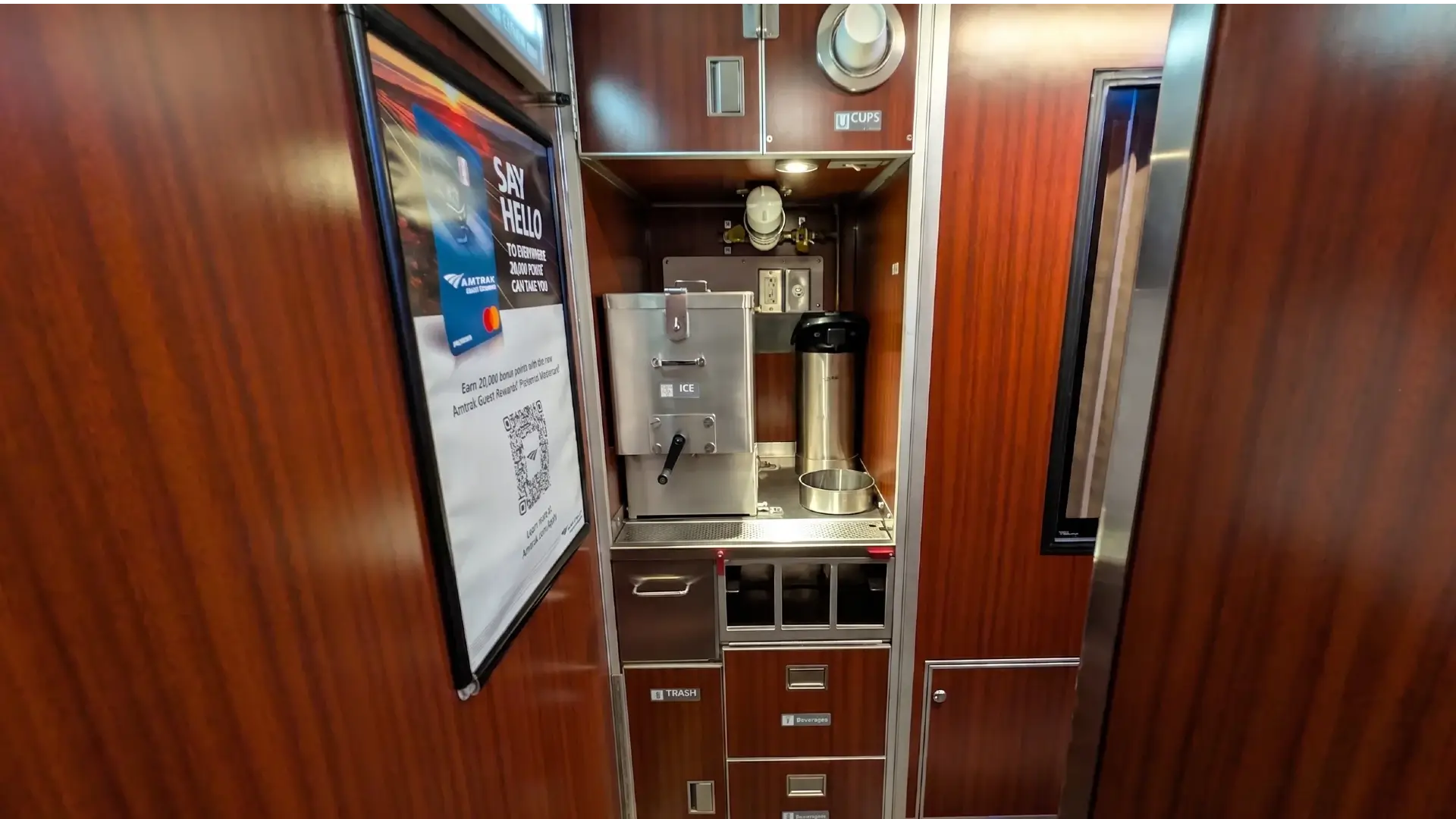
Empty Coffee Station in Sleeper Car
The private wet room measures roughly 3′ x 3′ and contains an airline-style toilet and a handheld showerhead. The utilitarian plastic walls give it a porta-potty feel, and we quickly decided to skip showering on board. If you do use the bathroom, bringing slip-on waterproof shoes is essential. Additionally, the rocking of the train makes keeping the toilet seat propped open a challenge, so plan accordingly.
Down the corridor, a self-service coffee station is provided for the car. Unfortunately, it rarely had fresh coffee brewed. When we inquired, our car attendant directed us three cars forward to the café car instead.
Dinner & Evening Operations
Boarding and baggage loading took about 45 minutes. During that window, the dining attendant walked through the first-class sleeper cars to book dinner reservations. We hoped for a late seating to unwind first, but the scheduling happened quickly. Poking her head into our cabin, she asked, “Joining us for supper?” Before I could reply, she said, “6:30!” and was immediately gone.
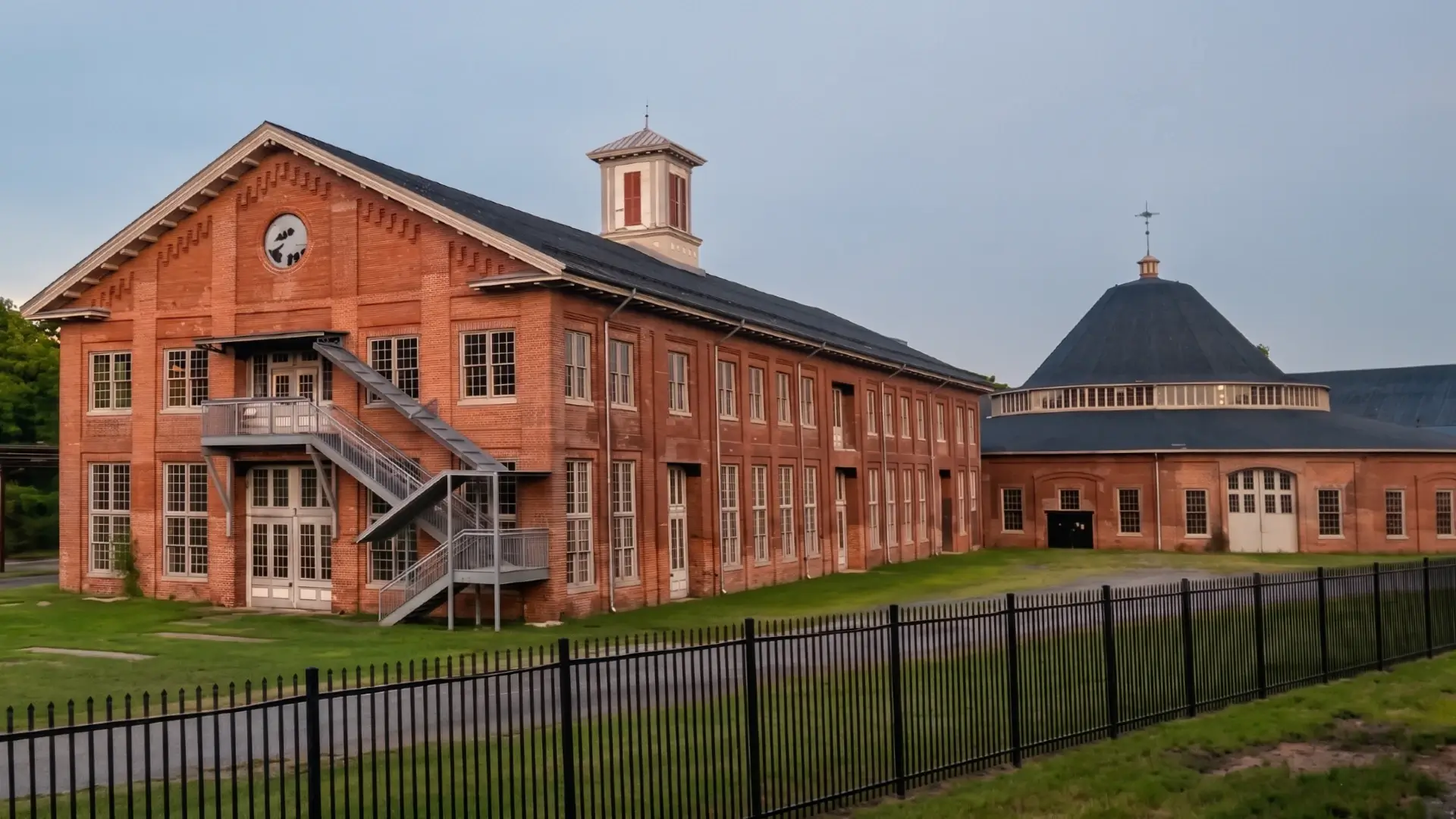
Historic Martinsburg Roundhouse, Martinsburg, WV (39.459223, -77.960287)
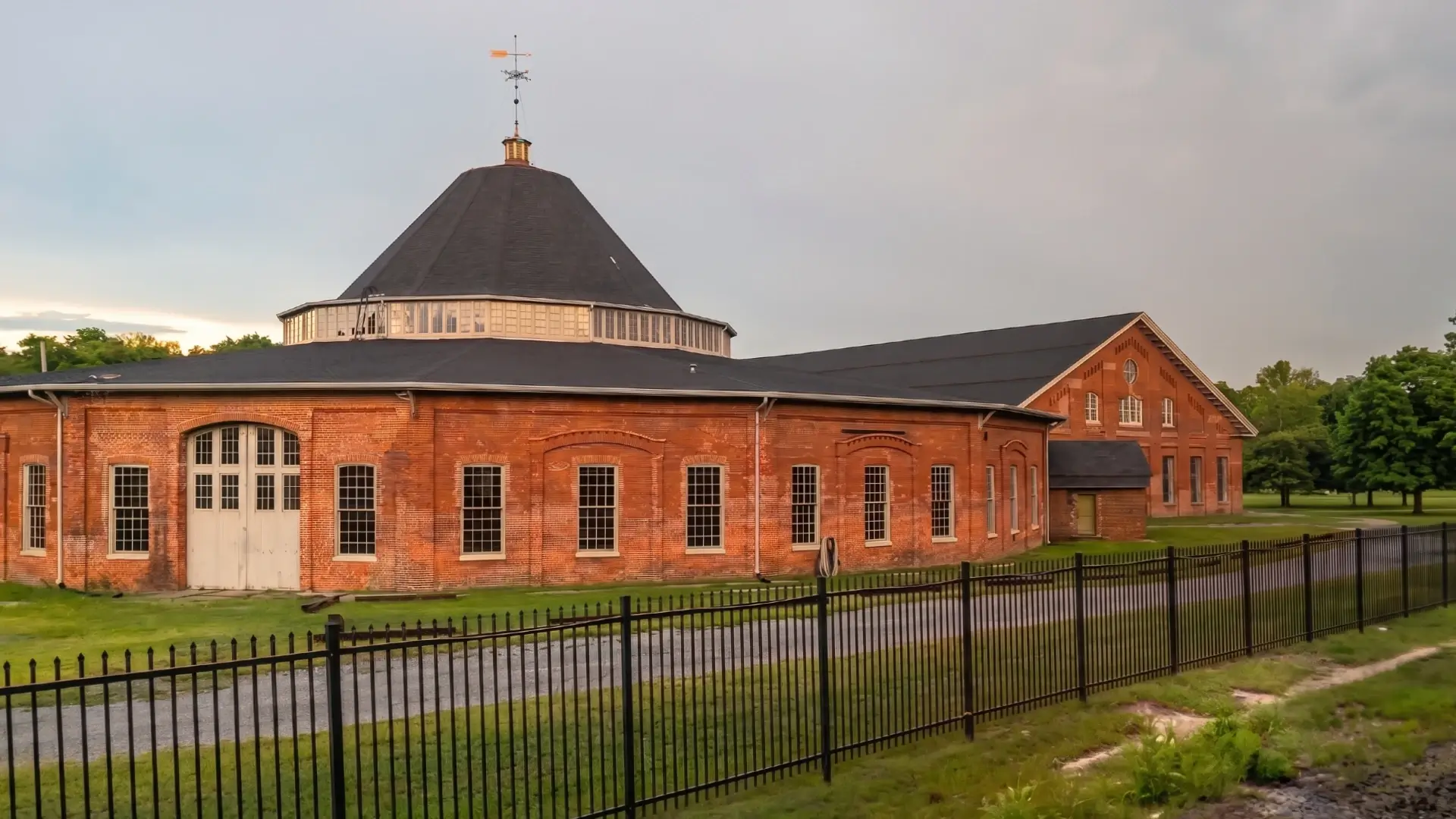
Historic Martinsburg Roundhouse, Martinsburg, WV (39.459223, -77.960287)
We departed Chicago on schedule, settling in as the train rolled past the city’s South Side and through Gary, Indiana. Around 5:30 PM, we walked to the café car hoping for pre-dinner drinks. As we approached, the dining attendant stopped us abruptly, stating the café had not opened yet and directing us to return to our room and wait for the intercom announcement. The café opened five minutes before our scheduled dinner seating, so we deferred our drinks until after the meal.
At dinner, we were seated with a pleasant couple from Chicago. Traditional communal dining can make for great conversation, though the service felt rushed. Staff announced over the dining car that because of the time zone shift, everyone needed to hurry through their meal to accommodate two dinner seatings in a compressed window.
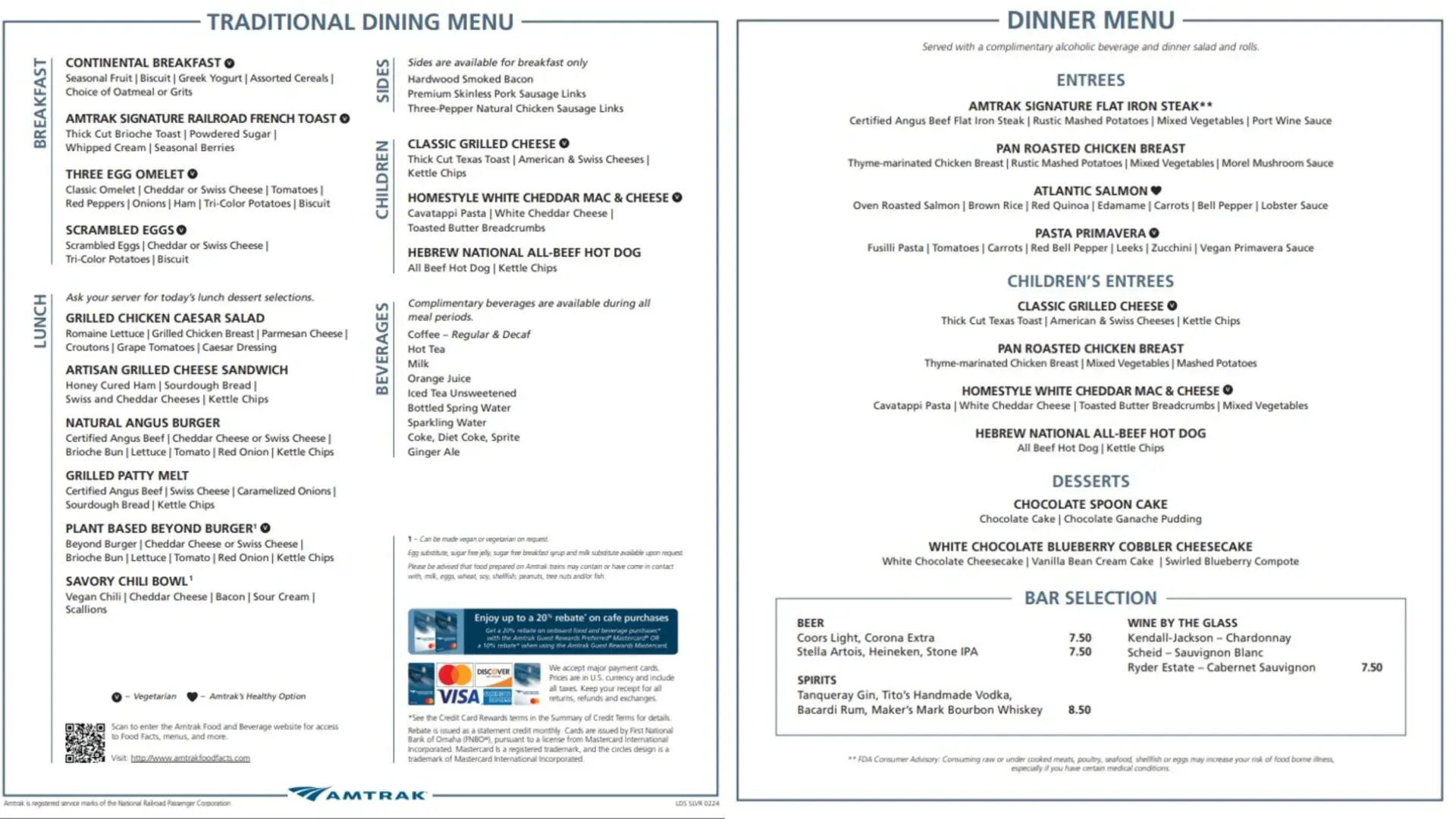
Amtrak Floridian Dining Car Menu
The food itself was a pleasant surprise. I ordered the Amtrak signature flat iron steak, Kim chose the pan roasted chicken breast, and we finished with the white chocolate blueberry cobbler cheesecake. The quality of both the entrées and desserts exceeded our expectations.
Following dinner, we attempted to visit the café car again, but found a line stretching roughly 40 passengers deep into coach. Seeing that the queue was barely moving, we headed back to our cabin.
Nighttime Sleep & Arrival
Around 9:30 PM, we pressed the attendant call button for turndown service. When the sofa was flattened and the upper berth lowered, the attendant discovered that the previous occupant’s sheets had not been stripped. After a 10-minute wait while he remade the beds with fresh linens, we turned in for the night.
With both bunks deployed, bedroom floor space is at a minimum—there is only about four inches between the lower bed and the vanity sink. The lower bunk lacks sufficient clearance to sit upright while the upper bunk is down, leaving the swivel chair as the only seated area.
While the gentle sway of the train was relaxing to us, the minimum mattress pad provided did nothing for comfort. Furthermore, the heavy vestibule door between train cars remained stuck open most of the night, letting in noticeable track noise.
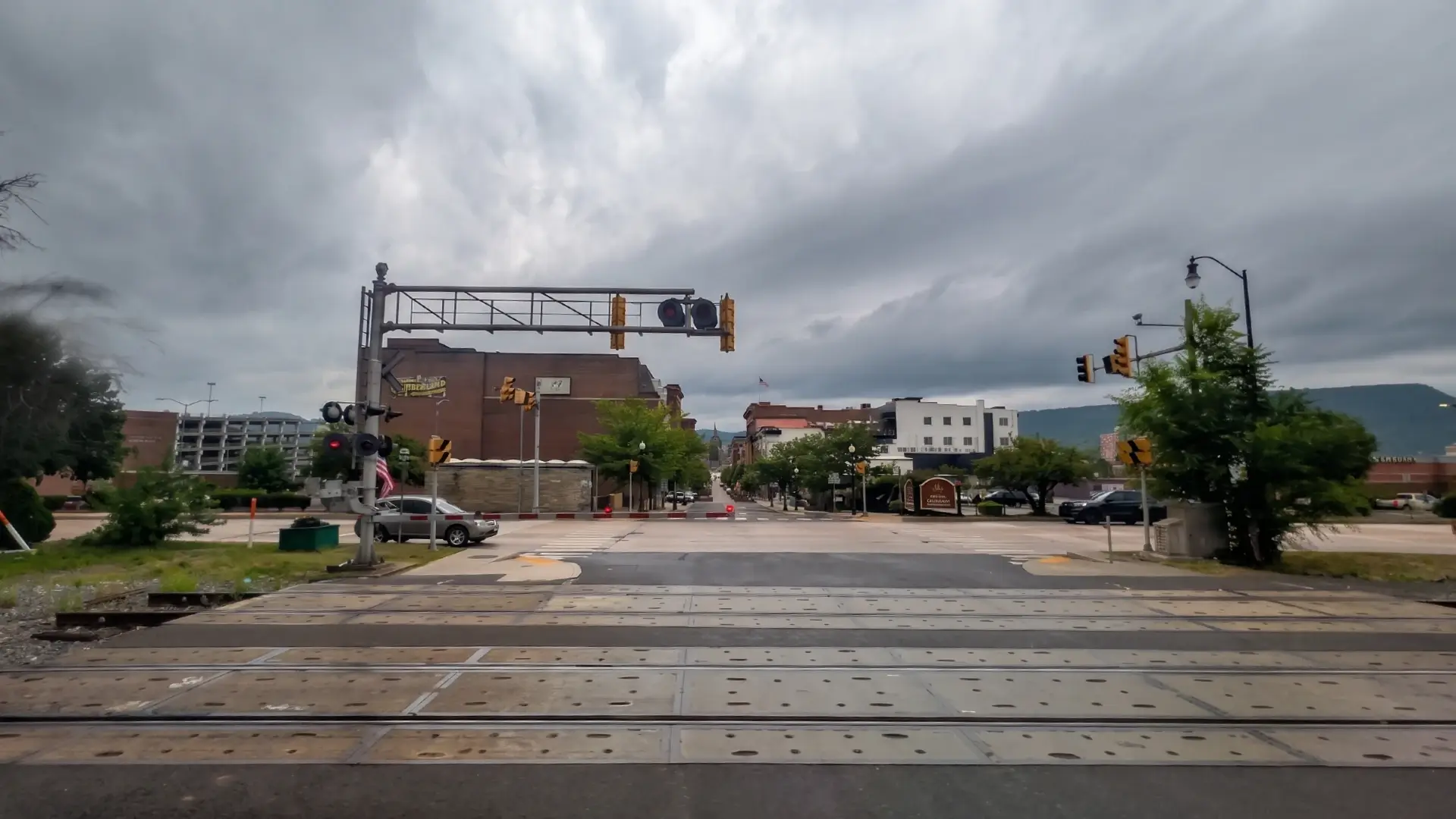
Cumberland Gap, Cumberland, MD (39.639669, -78.766568)
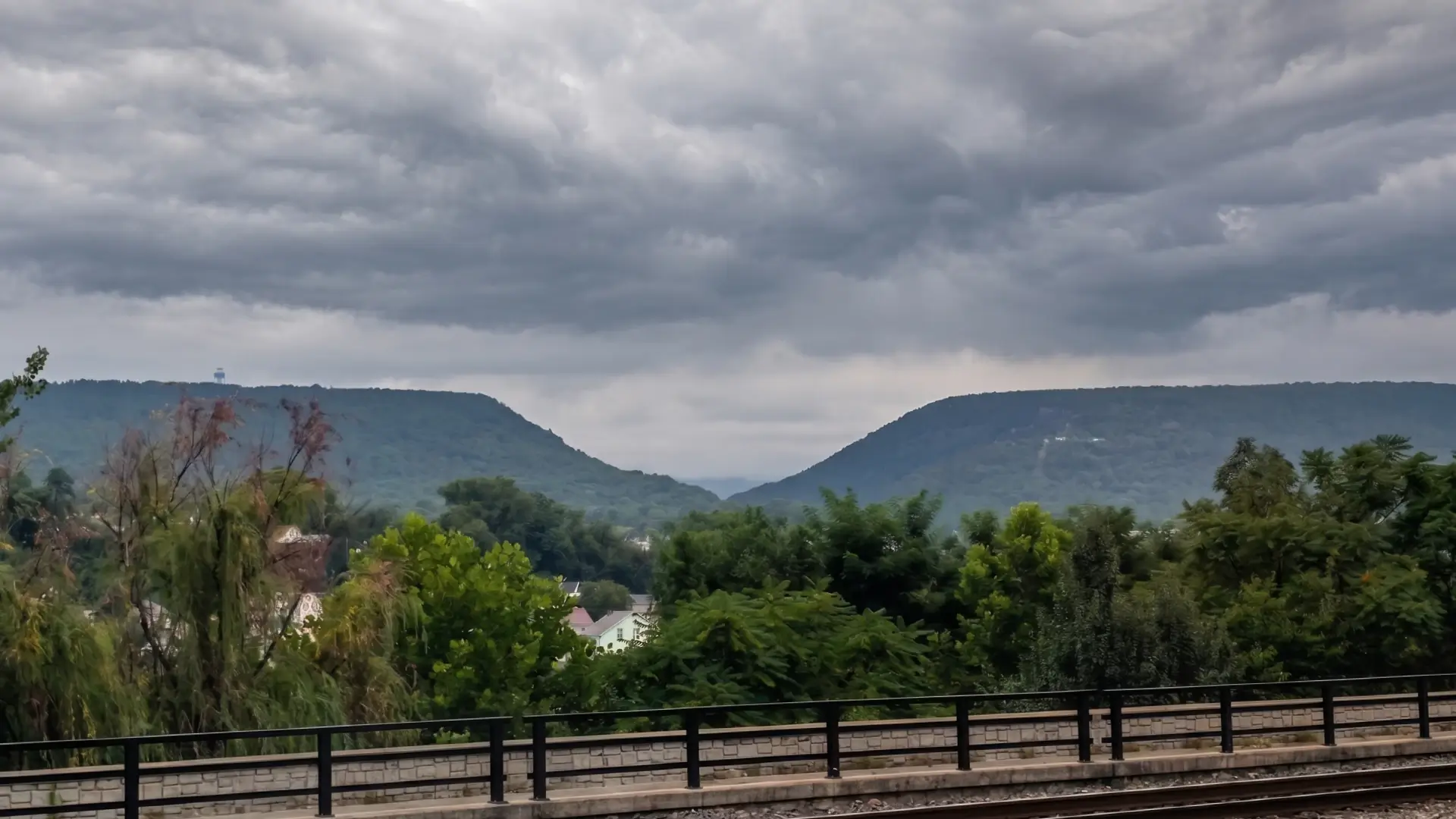
Cumberland Gap, Cumberland, MD (39.639669, -78.766568)
We awoke east of Pittsburgh, Pennsylvania, roughly seven hours out from our destination. After stowing the beds, we enjoyed breakfast—a straightforward menu featuring pre-mixed omelets, continental items, breakfast meats, toast, juice, and coffee. Although lunch was also included in our sleeper ticket, the train arrived at Washington Union Station on schedule just after 1:00 PM, so we opted to eat in the city instead.
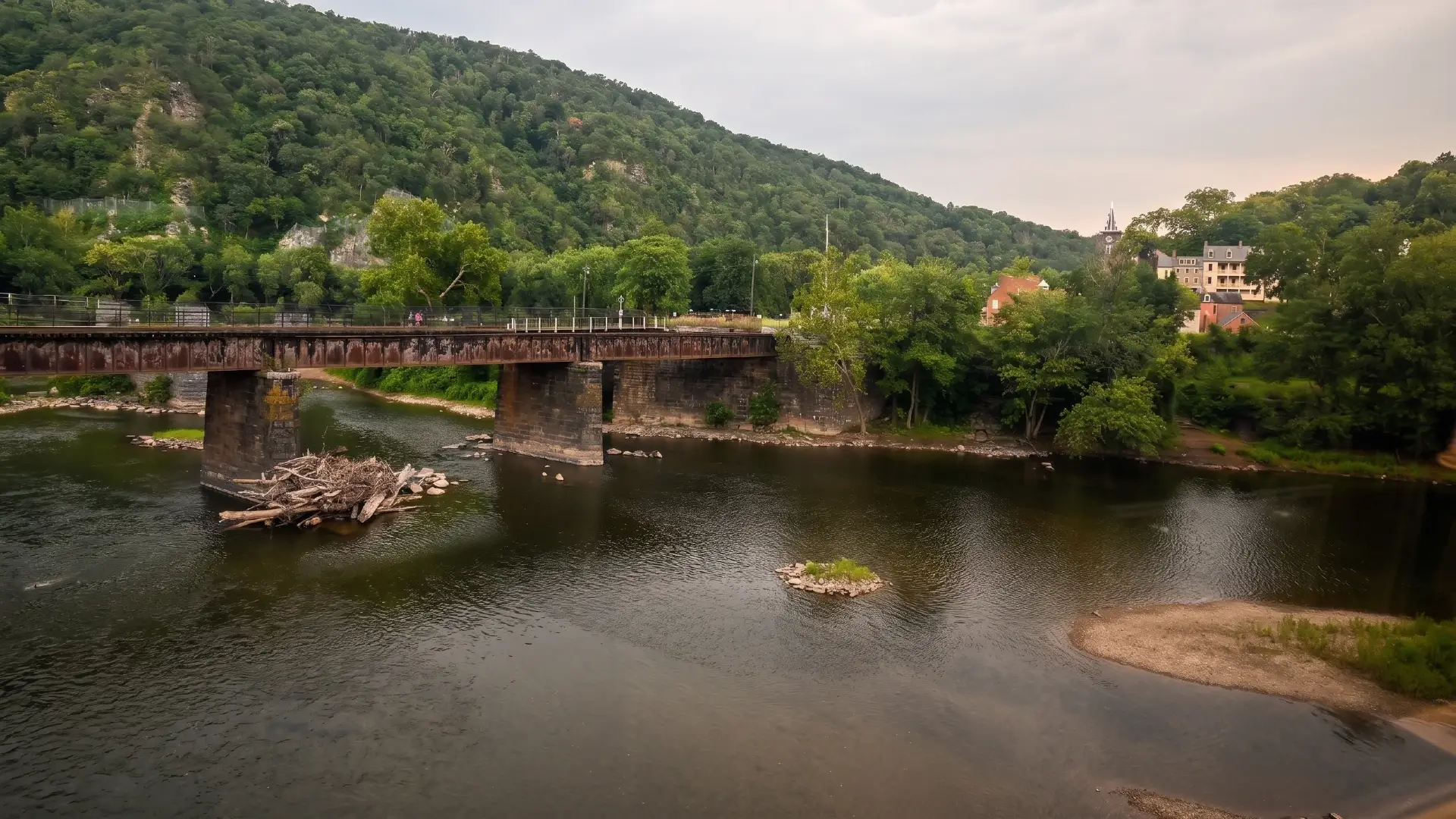
B&O Railroad Bridge, Harpers Ferry, MD (39.324486, -77.728160)
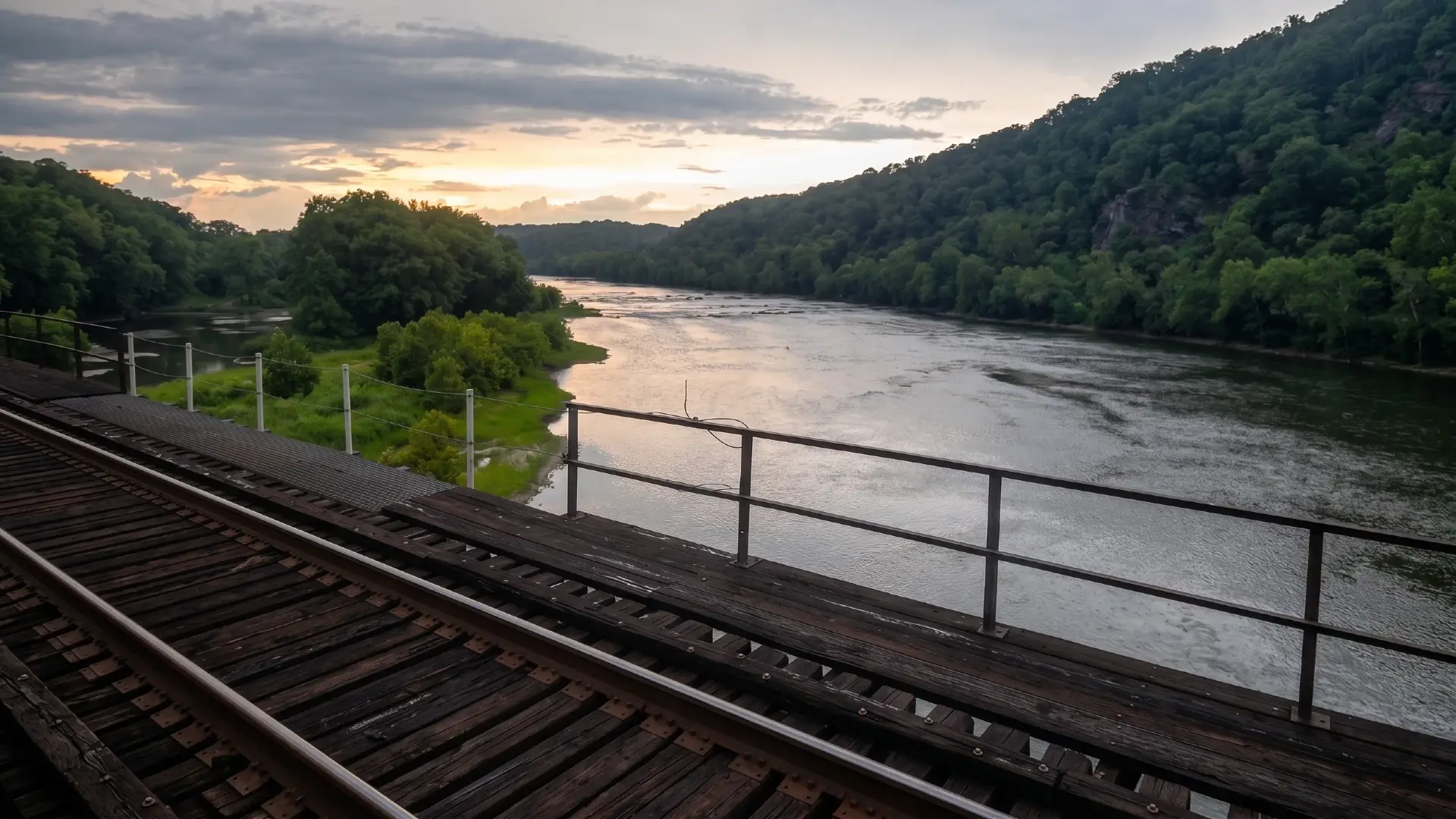
B&O Railroad Bridge, Harpers Ferry, MD (39.324486, -77.728160)
Arriving at Washington’s Union Station
Designed by architect Daniel Burnham as part of the visionary 1901 McMillan Plan, Washington Union Station was conceived to give the nation’s capital a grand, ceremonial gateway. When it opened in 1907, the monumental Beaux-Arts terminal consolidated all of the rail lines that previously crisscrossed the National Mall into a single terminal. Inspired by the Arch of Constantine and the Baths of Diocletian, Burnham crafted a white granite facade anchored by three colossal entrance arches, a 96-foot-high barrel-vaulted Main Hall gilded with 22-karat gold leaf, and 36 statues of Roman legionnaires guarding the perimeter. It even featured a lavish private Presidential Suite—designed for dignitaries and presidents like William Howard Taft and Woodrow Wilson—cementing its place as the entrance to American political life.
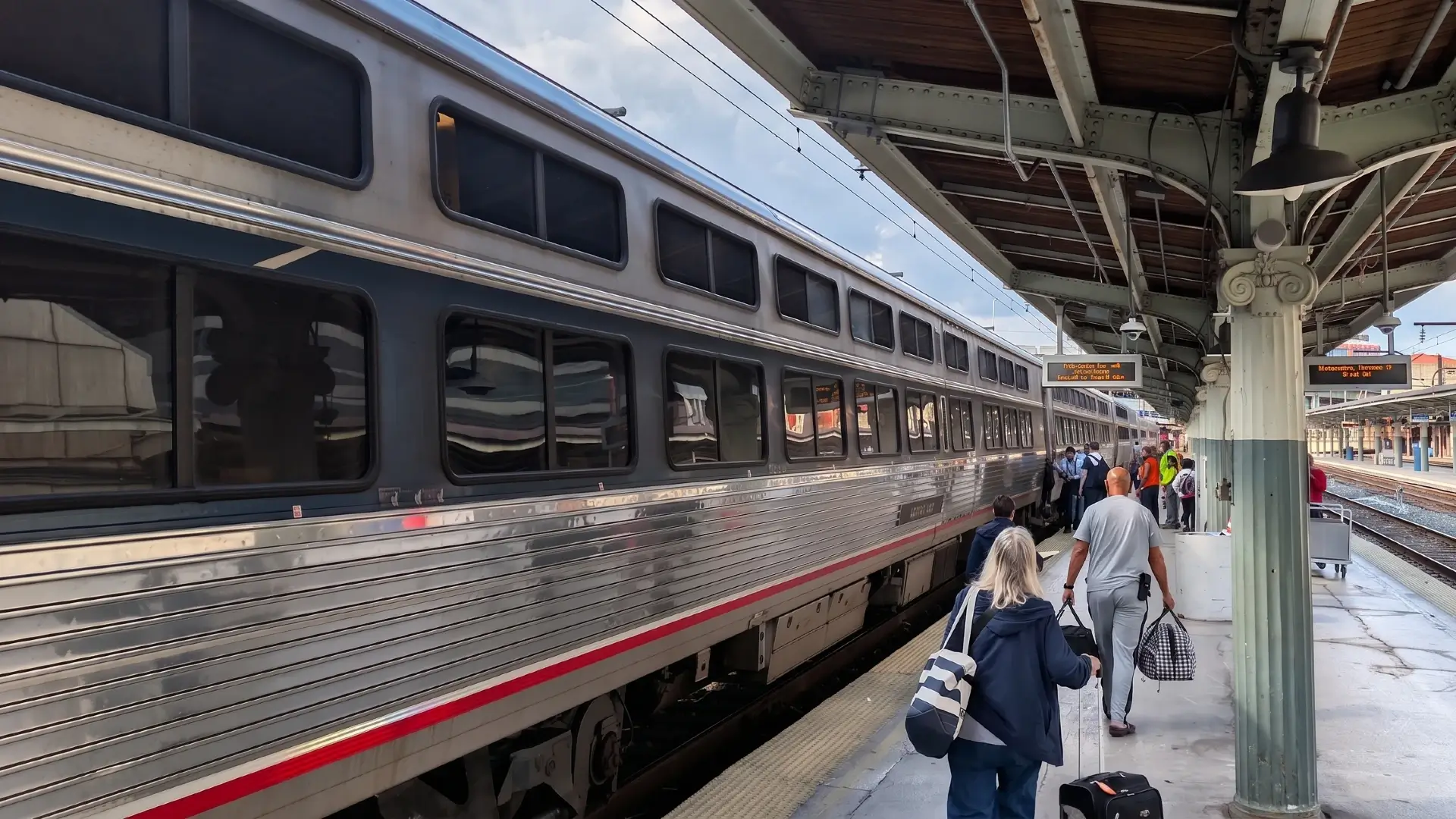
Union Station, Washington DC (38.897580, -77.005737)
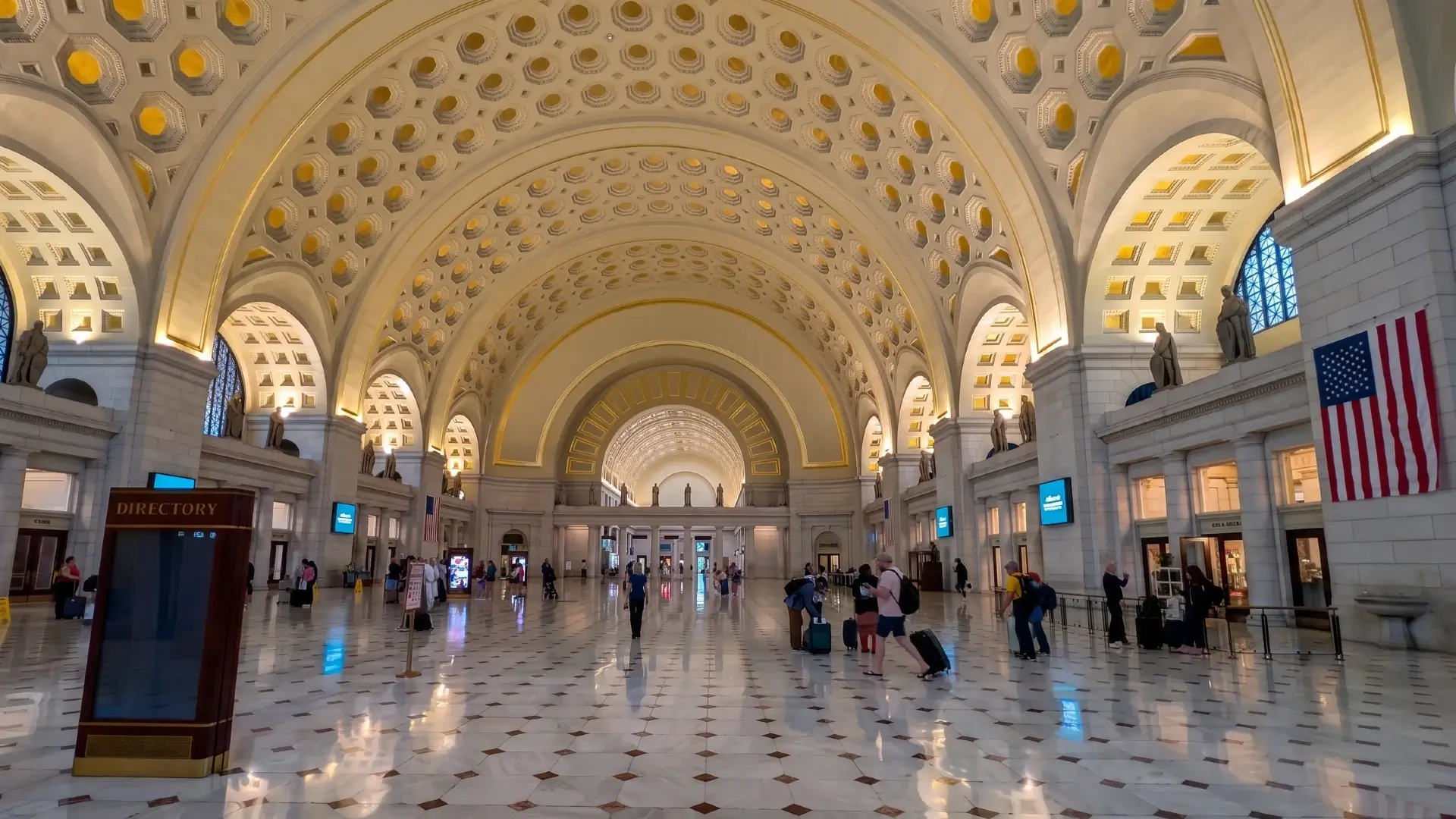
Union Station, Washington DC (38.897580, -77.005737)
During the golden age of rail and the height of World War II, Union Station operated around the clock, handling over 100,000 soldiers, government officials, and commuters daily. However, the postwar boom in aviation and interstate highways hit the station hard. By the late 1960s, passenger traffic had plummeted, and a disastrous 1976 bicentennial attempt to convert the depot into the “National Visitor Center” left the historic building neglected, plagued by structural leaks, and largely abandoned.
Congress stepped in with the Union Station Redevelopment Act of 1981, sparking a massive $160 million preservation and revitalization effort. Reopening in 1988, the station was reborn as a vibrant mixed-use marvel, blending premier transit with high-end shopping and dining. Today, it stands as one of the busiest multimodal transportation hubs in the United States and the southern anchor of Amtrak’s Northeast Corridor, having reclaimed Burnham’s original vision as a grand, living entrance to the capital.
The Return Trip
The return trip, a week later, was equivalent to the first leg. Again, the sheets were dirty when making up the bed at night, the café car was packed with hungry travelers so getting a drink was out of the question, the dining car felt more like a military mess hall than a restaurant, and there was never any coffee in the sleeper cars. We arrived back in Chicago about two hours late, eager for a good night’s sleep.
The Conclusion
All in all, the experience was fair. The time spent in our cabin was great—we were able to converse in a private setting without anyone having loud speakerphone conversations, enjoy the beautiful scenery of the eastern United States as we sped by, and kick back without worrying about connecting flights or strict timetables
While the staff could have been friendlier, the dining experience elevated, and the room accommodations cleaner, the relaxing, hassle-free pace means we would most likely do it again; perhaps in a less-expensive room.
Rating
Ease of travel
★★★★★
Metropolitan Lounge employees
★★★★☆
Room quality
★★☆☆☆
Bathroom quality
★★☆☆☆
Dining car experience
★★☆☆☆
Cleanliness
★★☆☆☆
Train car employees
★☆☆☆☆
Sleeping accommodations
★☆☆☆☆
Value for cost
★☆☆☆☆
Overall Experience
★★☆☆☆


Leave a Reply
Want to join the discussion?Feel free to contribute!